
Driveways Built to Handle Loads and Weather
Driveway Installation in Albion for new home access, driveway extensions, or private road construction on residential properties
Driveways that develop ruts, washouts, or soft spots within the first few seasons indicate inadequate base preparation, improper drainage, or unsuitable gravel selection for the soil and traffic loads involved. New driveway construction requires removing unstable topsoil, establishing proper grade and crown for water runoff, and building aggregate base layers compacted to support vehicle weight without deformation during wet conditions common in Michigan. J.L. Simmons Excavating LLC installs gravel driveways and private roads in Albion, constructing stable access routes that shed water and maintain firm surfaces year-round. The difference shows up during spring thaw when properly built driveways remain passable while inadequate bases turn to mud under vehicle traffic.
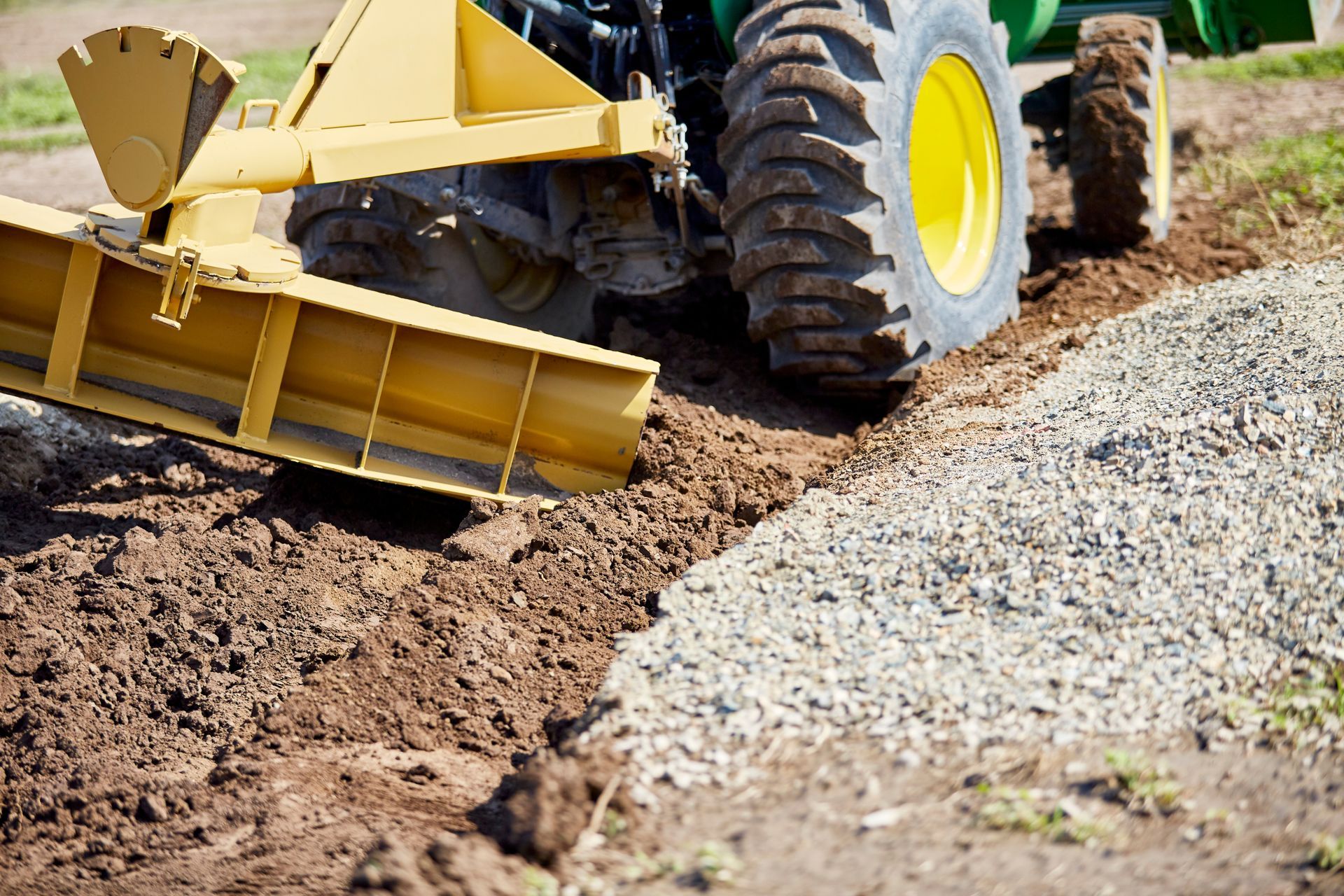
Driveway installation begins with excavating and removing organic topsoil that compresses under load, then grading the subbase to provide positive drainage and crown that moves water off the driving surface. Gravel base material is placed in compacted lifts, with aggregate size and type selected for the anticipated traffic and underlying soil conditions, creating a stable platform that distributes weight and prevents rutting.
Schedule a property visit to determine driveway routing, width requirements, and base depth for your access needs.
What Driveway Construction Actually Accomplishes
Driveway grading establishes crown or cross-slope that directs rainfall off the surface before water saturates base materials, typically using two to three percent grade from centerline to edges so water reaches ditches or vegetated areas rather than collecting in wheel tracks. Private road installation extends these same principles across longer distances, adding turnouts or wider sections where needed for vehicle passing and incorporating culverts or drainage structures where roads cross natural drainage paths.
Once driveway work is complete, your access route supports vehicle traffic without settling, maintains positive drainage that prevents standing water or ice buildup, and provides a firm driving surface even during wet seasons when surrounding ground is soft. Edges remain defined without gravel migrating into adjacent areas, and the crowned surface prevents water from cutting channels or washing material downslope during storms. Driveway extensions connect seamlessly to existing drives with matching grade and surface material.
Proper installation also considers long-term maintenance, including how easily the surface can be regraded if minor settling occurs and whether additional gravel can be added without disrupting drainage patterns. Driveways are built with adequate width for intended vehicles, whether standard passenger cars or delivery trucks, preventing edge breakdown caused by tires running beyond the prepared base.
Questions Before Starting Your Project
Property owners planning new driveways in Calhoun County frequently ask about construction details and material selection.
What base depth does a residential gravel driveway need?
Base depth depends on soil stability and traffic loads, with most residential driveways requiring 8 to 12 inches of compacted aggregate over stable subgrade, increasing where clay soils or heavy vehicle use demands additional support.
How is driveway width determined for new construction?
Standard driveway width runs 10 to 12 feet for single-lane residential access, with wider sections at curves or steep grades where vehicles need additional maneuvering space, and 16 to 20 feet for private roads accommodating two-way traffic.
What type of gravel works best for driveways in Albion?
Crushed limestone or gravel with angular particles compacts more effectively than rounded stone, providing better interlock and stability, with a mix of particle sizes filling voids and creating dense surfaces that resist rutting under traffic.
When should culverts be installed during driveway construction?
Culverts are placed before base materials go down, positioned where driveways cross drainage ditches or natural water flow paths, sized to handle anticipated stormwater volume without backing up or washing out during heavy rain events.
How does seasonal timing affect driveway installation quality?
Installation proceeds most reliably during dry periods when subgrade can be properly compacted without excess moisture, with spring and fall offering moderate conditions in Michigan that allow effective base preparation without summer heat or winter freezing complications.
For driveway construction, extensions, or repairs, J.L. Simmons Excavating LLC delivers gravel access routes engineered for your property's soil and drainage conditions. Call (248) 818-9881 to review driveway options and receive a project estimate based on your site.